Yes, in most places anyone can create a certification program. You can define a skill standard, assess people against it and issue your own certificates. What differs is how much credibility the certificate carries, and that depends on your assessment, your reputation and whether an independent body has approved the program. This is not legal advice, and some industries have rules about who may certify what, so check the regulations that apply where you operate.
This guide explains what a certification program is, how it differs from a certificate and from accredited certification, the elements it needs and the steps to build one.
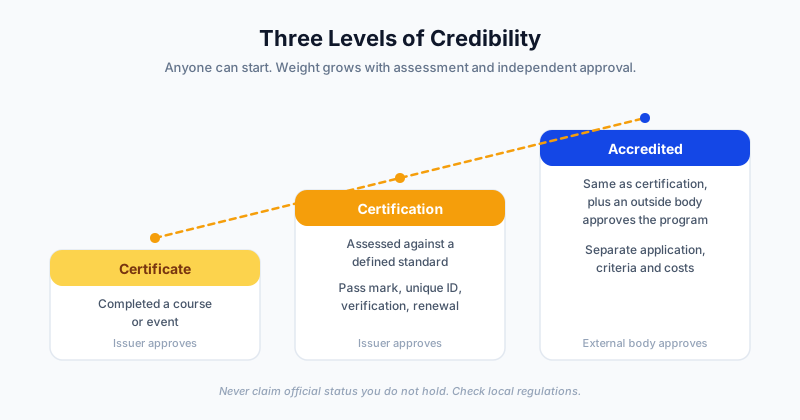
Certificate vs Certification vs Accredited Certification
These three terms get mixed up, and the difference decides how you can describe your program.
| Certificate | Certification | Accredited certification | |
|---|---|---|---|
| What it shows | Completed a course or event | Met a defined standard in an assessment | Met a standard in a program independently approved |
| Assessment required | Not always | Yes | Yes |
| Renewal | Rarely | Often | Usually |
| Who approves the program | The issuer | The issuer | An external accrediting body |
| Example | Workshop completion | A company's internal skills program | A program recognised under a formal accreditation scheme |
Anyone can issue the first two. The third is a separate process with an outside organization, with its own criteria and costs. A certificate from your own program is valid as your organization's statement, but you should not describe it as government-approved, accredited or recognised by an official body unless that is genuinely true and documented.
Can I Create My Own Certification Program?
Yes. Companies do it for employees, training providers do it for students, and communities do it for members. The honest framing is: "This certifies that the holder met the standard set by [Organization]."
Where people get into trouble is overstating. Avoid wording that implies official status you do not have. If a regulator, employer or professional body decides what counts as qualified in your field, a certificate from your program may help a person's profile, but it will not replace that requirement. Check local regulations and the rules of any industry body before you promote your program.
Elements of a Certification Program
A program people take seriously usually has these building blocks:
- Clear learning outcomes. Spell out what a certified person can do. "Can set up and run a bulk email campaign" is better than "understands email marketing."
- An assessment. A test, practical task, project or observed demonstration. Without one, you have a completion certificate, not certification.
- A passing standard. Decide the pass mark or criteria in advance and apply it to everyone.
- A consistent curriculum or study guide. People should know what they are being measured on.
- A certificate with a unique ID. Include name, program title, date, issuer and a reference number.
- A way to verify. A QR code or lookup page lets employers confirm a certificate is real. See our QR verification guide.
- A renewal or expiry rule. Many programs require a refresh every one to three years so the credential stays current.
- Records and a conduct policy. Keep results, handle complaints and explain what happens if someone cheats or a certificate is revoked.
How to Create a Certification Program: Step by Step
1. Define the purpose and audience
Who is this for, and what will it help them do? A program for new hires differs from a public skills credential.
2. Write the outcomes and standard
List the competencies. Keep them measurable, and keep the list short enough to assess properly.
3. Design the assessment
Match the method to the skill: quizzes for knowledge, practical tasks for skills, a project for applied work. Make the marking criteria clear.
4. Build or gather the training
This can be a course, a workshop series or a self-study guide. Our certificate program guide covers the structure in detail.
5. Decide on renewal
Choose whether certification lasts forever or expires, and what a renewal requires.
6. Design the certificate
Include the recipient, program title, date, issuer, signature, unique ID and a verification code. If you are unsure what to include, see who can issue a training certificate.
7. Issue and verify at scale
Once people pass, generate a certificate for each from a spreadsheet and send them by email. Keep a record of every certificate issued.
8. Review and improve
Look at pass rates, feedback and employer response, then adjust the assessment and outcomes.
How to Certify a Training Program
If your question is how to certify a training program you already run, the process is shorter:
- Write down what participants should be able to do by the end.
- Add an assessment, even a short one, so the certificate means something.
- Issue certificates only to those who meet the standard.
- Keep attendance and assessment records.
- If you want formal accreditation, approach the relevant external body and follow their application process. That is separate from simply issuing your own certificates.
For an employee version of this, read our guide to an internal certification program for employees.
Building Credibility Without Accreditation
If you are not accredited, you can still make the program trustworthy:
- Publish the outcomes and assessment criteria openly.
- Use subject experts to design and mark the assessment.
- Make certificates verifiable so they cannot be easily faked.
- Be transparent: describe the certificate as issued by your organization.
- Track results and keep your standards consistent over time.
Getting Started
Anyone can start a certification program, but the value comes from the assessment, the standard and the ability to verify results. Start small, be honest about what the certificate represents and improve it over time.
SendCertificates helps you design a certificate, upload a spreadsheet of people who passed, send personalised certificates in bulk and add QR code verification and delivery tracking. You can start with 50 free credits.
Related Guides
Tags