"This certificate is presented to" is the most common opening line on a certificate. It introduces the recipient's name in a neutral, ceremonial way, and it works for appreciation, participation, recognition and most other certificates. If the person won or earned something specific, "awarded to" is usually the stronger choice, and "hereby awarded to" adds a formal tone for diplomas and honours.
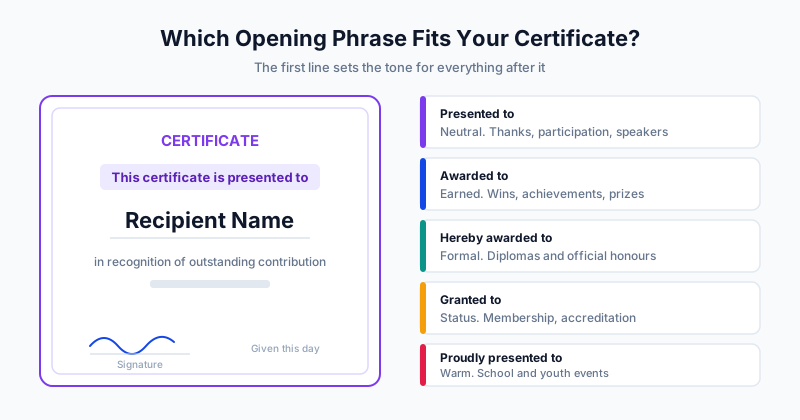
What "Presented To" Actually Signals
The opening phrase sets the tone before anyone reads the rest. It tells the reader whether the document is a thank-you, a result or an official act. Pick the wrong one and a friendly volunteer certificate sounds like a court order, or a hard-won prize sounds like a handout.
A complete certificate sentence has five parts:
- Opening phrase: "This certificate is presented to"
- Recipient name: the largest text on the page
- Reason line: "for outstanding contribution to..."
- Date and place: "Given this 12th day of May 2026"
- Issuer and signature: the person or body that stands behind it
The phrases below only change part one, but that choice shapes how parts two and three should be worded.
The Main Opening Phrases and When to Use Each
This certificate is presented to
Neutral and ceremonial. It says "we are formally handing you this" without claiming a competition or a rank. Good for appreciation, participation, speakers, volunteers and event certificates.
This certificate is presented to Maria Santos in appreciation of her dedicated service as event volunteer.
This certificate is awarded to
Implies the recipient earned it through performance, a result or a decision. Good for achievements, scholarships, competitions and employee awards. See the award certificate guide for more.
This certificate is awarded to Arjun Mehta for outstanding performance in the Regional Science Challenge.
Proudly presented to
Warmer and more celebratory. It suits school events, sports days, youth programs and anything where the tone should feel personal rather than formal.
Proudly presented to Leah Thompson for showing great teamwork all season.
Is hereby awarded to
Formal and declarative. "Hereby" means the award takes effect through this document. Use it for diplomas, honours, official qualifications and formal recognition.
The Board of Studies hereby awards Daniel Okafor the Diploma in Applied Data Analysis, having met all requirements of the program.
Is granted to
Suggests permission, status or entitlement rather than a prize, such as membership, accreditation or a licence-style document.
This membership is granted to Priya Nair, effective 1 January 2026.
In recognition of
This one is not an opener but a reason phrase that pairs with any of the above. It is the safest way to explain why the certificate exists. Our certificate of recognition guide covers it in depth.
Presented to Samuel Cho in recognition of five years of dedicated service.
Quick Chooser Table
| Situation | Best opener | Pair with |
|---|---|---|
| Volunteer or thank-you | Presented to | "in appreciation of" |
| Participation or attendance | Presented to | "for participating in" |
| Competition winner | Awarded to | "for first place in" |
| Employee achievement | Awarded to | "for outstanding performance" |
| Diploma or formal honour | Is hereby awarded to | "having successfully completed" |
| Membership or status | Is granted to | "effective from" |
| School or youth event | Proudly presented to | "for showing" |
Formal vs Modern Wording
Formal certificates lean on traditional constructions: "is hereby awarded", "in witness whereof", "given this day". Modern certificates are shorter and sound like a person wrote them: "Congratulations to Maria Santos on completing the Spring Leadership Workshop."
Use formal wording when the certificate may be used as evidence of qualification, such as for a diploma or professional credential. Use modern wording for events, communities, workshops and internal recognition. For a middle path, keep the traditional opener and write the reason line in plain language.
"Given this day" and date lines
"Given this 20th day of June, 2026" is the classic closing line. It is optional. A simple "Date: 20 June 2026" is perfectly acceptable and easier to fill from a spreadsheet when you are issuing many certificates.
Full Sample Sentences You Can Adapt
- This certificate is presented to [Name] in appreciation of exceptional service to the Hillview Community Garden.
- This certificate is awarded to [Name] for achieving the highest score in the 2026 Spelling Bee.
- Proudly presented to [Name] for outstanding effort and a positive attitude throughout the term.
- This is to certify that [Name] is hereby awarded the Certificate in Project Management upon successful completion of all modules.
Looking for more? The certificate wording examples collection and the certificate of appreciation wording guide both give ready-to-use lines.
Common Mistakes to Avoid
- Mixing registers: "Hereby awarded" with a casual reason like "for being awesome" feels off.
- Using "awarded to" for participation, which can suggest a ranking that did not happen.
- Putting punctuation after the name, which breaks the visual flow.
- Overlong reason lines. One sentence is enough. Details belong in the description or on a separate transcript.
- Skipping the issuer. A certificate with no named organization or signature feels unofficial.
- Spelling the name wrong. This matters more than any phrase. Pull names from a verified spreadsheet instead of retyping them.
Getting Started
Once you have settled on your wording, the quickest way to issue it is to build the template once and merge names in. SendCertificates lets you choose a template, upload a spreadsheet of recipients, personalise each certificate with name and date fields, and email them with a QR code for verification. You can start free with 50 credits and test your wording on a few recipients first.
Related Guides
Tags